
Expert Flat Roof Replacement in Roseville, CA
We replace aging flat roof systems for commercial buildings, industrial facilities, multi-family properties, and residential structures. Gauntlet Roofing uses premium TPO, EPDM, PVC, modified bitumen, and built-up roofing systems. Every installation is code-compliant, energy-efficient, and backed by strong manufacturer and workmanship warranties.
Why Roseville Property Owners Choose Our Flat Roofer for Replacement?
Property owners choose us for flat roof renovation because we focus on proper drainage design, material performance, and long-term roof durability, not just basic replacements.
- Flat-roof-specific expertise addressing ponding prevention, membrane sealing, and structural requirements unique to flat and low-slope systems
- Drainage-first replacement design with proper slope, drain placement, and water flow planning to reduce leaks and premature roof failure
- Code-compliant, structurally sound replacements meeting local building codes, load standards, and manufacturer specifications for safety and warranty protection
- Licensed and fully insured roofing contractor for compliant, protected, and risk-free projects
- Locally owned and operated, with hands-on knowledge of regional climate conditions and building requirements
- Transparent inspections and clear recommendations with honest assessments and detailed replacement plans so owners understand scope, costs, and needs upfront
Request a Fast Quote Today.
What Flat Roofing Systems Our Flat Roofer Replaces?
As a local and licensed roofing contractor, we do all kinds of flat roofing renovation. Our flat roofer has 15+ years of experience in this field.
Office Building Flat Roof Replacement
{brand name} provides professional office building flat roof replacement that protects your property and supports daily operations. We begin with a detailed roof inspection, then we replace the failing membrane system and related components. As a result, you get a watertight, code-compliant flat roof built for long-term performance.
- Replace aging TPO, EPDM, PVC, modified bitumen, or BUR roof systems
- Improve energy performance with insulation upgrades and proper vapor control (when needed)
- Seal risk areas like penetrations, parapet walls, edge metal, and flashing transitions
Warehouse Flat Roof Renovation
Warehouses need commercial-grade roofing that performs across large surface areas. That’s why {brand name} handles warehouse flat roof renovation using system-level improvements, not quick patches. We assess moisture, correct drainage, and install durable membranes that reduce recurring leaks.
Moisture evaluation with targeted testing to identify saturated insulation
Drainage and slope solutions to reduce ponding water and membrane stress
New membrane installation with reinforced seams, terminations, and roof flashing
Retail Centers Flat Roof Restoration
Retail properties need speed, safety, and clean execution. {brand name} delivers retail centers flat roof restoration with a planned workflow that reduces disruption while improving roof reliability. We focus on leak prevention, drainage performance, and strong detailing at every transition point.
Condition-based approach: selective tear-off or full replacement when required
Improve flow at scuppers, internal drains, overflow drains, and low-slope areas
Install replacement membranes with watertight seams and secure edge and curb details
Apartment Complex Flat Roof Replacement
Multi-family buildings require consistency across multiple roof sections and penetrations. {brand name} manages apartment complex flat roof replacement with clear communication and phased scheduling. Therefore, residents experience fewer interruptions and owners gain dependable long-term protection.
- Section-by-section planning to maintain access and reduce resident impact
- Replace wet insulation to improve comfort, reduce heat loss, and support HVAC efficiency
- Reinforce common failure points: vents, skylights, pipe boots, and mechanical curbs
Industrial Flat Roof Replacement
Industrial facilities demand heavy-duty materials and high-performance installation. {brand name} completes industrial flat roof replacement using durable membrane systems, reinforced flashing, and secure perimeter detailing. In addition, we prioritize roof lifecycle value, safety compliance, and documentation.
- Install industrial-grade membranes, including PVC for chemical or grease exposure (when applicable)
- Strengthen the system with high-performance flashing, edge securement, and penetration sealing
- Deliver manufacturer-aligned installation standards with final inspection documentation and warranty support
How We Help Choose the Right Flat Roofing System
The best flat roofing system depends on roof structure, drainage design, climate exposure, and budget. During replacement planning, we evaluate these factors to recommend the most effective and long-lasting solution.
How We Handle Roseville’s Climate Affects On Flat Roof replacements
Roseville’s climate affects flat roof replacements by requiring heat-resistant materials, UV protection, and effective drainage systems to prevent premature roof failure.
High Summer Temperatures
Roseville experiences extended periods of high heat, which can cause roofing materials to expand, contract, and degrade if they are not designed for thermal stress. Flat roofs must use membranes that maintain flexibility and seam strength under extreme temperatures.
UV Exposure Impacts
Constant sun exposure accelerates UV damage, leading to cracking, brittleness, and membrane breakdown. Flat roof systems installed in Roseville require UV-resistant surfaces or reflective membranes to reduce long-term wear.
Seasonal Rain & Drainage Requirements
Although rainfall is seasonal, flat roofs must handle sudden heavy rain efficiently. Proper slope design, internal drains, and scuppers are essential to prevent ponding water, which is a leading cause of flat roof leaks and structural damage.
Material Selection Considerations
Because of Roseville’s heat and sun exposure, materials such as TPO, EPDM, and modified bitumen are commonly selected for their durability, flexibility, and resistance to environmental stress.
Want to Hiring the Right Flat Roofer for Roof Replacement in Roseville, CA?
Flat roof systems require technical precision. They depend on proper slope, sealed membranes, and reinforced flashing. Therefore, experience and system knowledge are critical. Poor installation can lead to ponding water and early membrane failure.
For this reason, working with a professional flat roofer ensures correct drainage planning and long-term waterproof protection. A qualified expert understands TPO, EPDM, PVC, and modified bitumen systems. In addition, they follow local code requirements and manufacturer specifications. As a result, your flat roof performs better under heat, UV exposure, and seasonal rain.
What Is Our Step-By-Step Flat Roof Replacement Process?
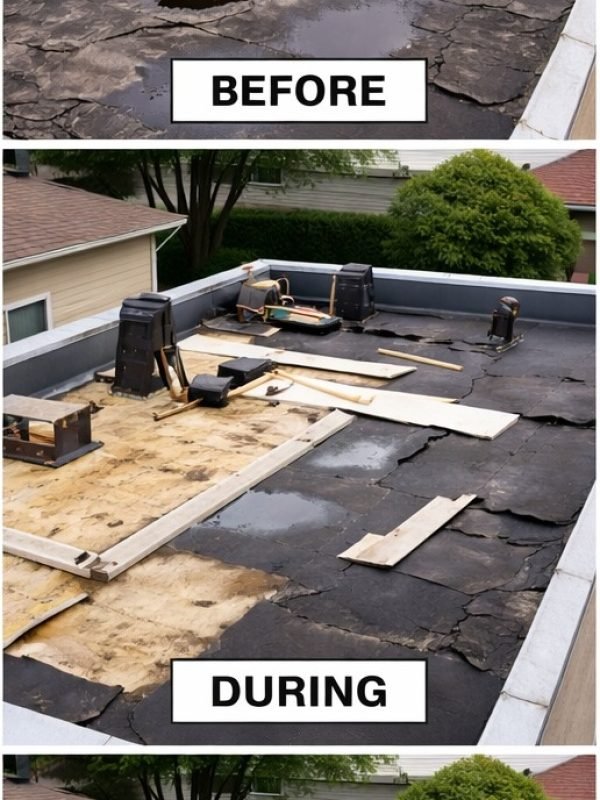
Flat roof replacements follow a four-step process designed to ensure proper drainage, structural safety, and long-term performance.
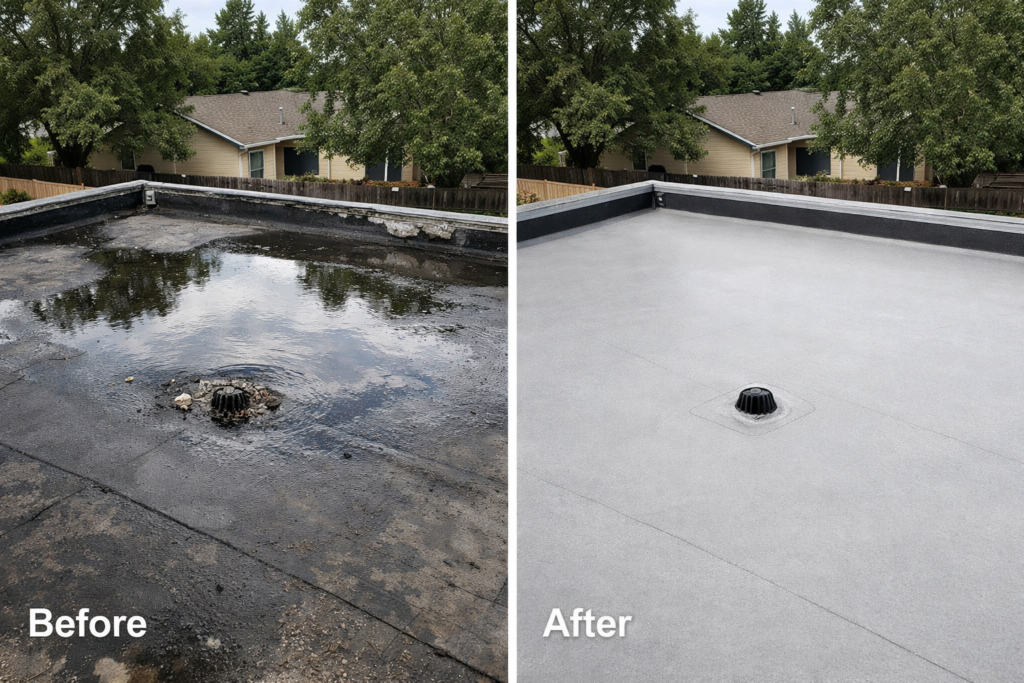
Flat Roof replacements Before & After Projects
Real flat roof replacements show how drainage, materials, and proper sealing change roof performance. These projects document common flat roof issues before replacements and the corrected conditions after completion.

Our Flat Roofing replacements Service Areas
- Roseville, CA (95661, 95678, 95747)
- Rocklin
- Citrus Heights
- Granite Bay
- Placer County & surrounding Sacramento Valley suburbs
Schedule a Flat Roofing replacements Consultation
A flat roofing replacement consultation provides a professional roof inspection, expert guidance, and a clear estimate to help property owners plan the right flat roofing solution.
Frequently Asked Questions
How long does flat roof replacements take?
Flat roof replacements typically take 2 to 5 days, depending on the roof size, chosen material, drainage work, and whether an old roof needs to be removed.
Are flat roofs energy efficient?
Yes, flat roofs can be highly energy efficient when installed with reflective membranes like TPO and proper insulation, helping reduce heat absorption and cooling costs.
Can flat roofs handle heavy rain?
Flat roofs are designed to handle heavy rain when they include proper slope, drainage systems, and sealed membranes to prevent standing water and leaks.
How soon can a flat roof be used after replacements?
Most flat roofs can be used within 24 hours after replacements once the membrane, seams, and flashing have fully cured and passed final inspection.
Do flat roofs require more maintenance than sloped roofs?
Flat roofs require regular inspections and debris removal, but with proper maintenance, they can perform just as reliably as sloped roofs
How long does a flat roof last after replacements?
A properly installed flat roof typically lasts 20–30 years, depending on the roofing system, climate exposure, and maintenance routine.
Is drainage included in flat roof replacements?
Yes, professional flat roof replacements include drainage planning, such as tapered insulation, internal drains, or scuppers to prevent ponding water.
What is the best material for flat roof replacements?
The best flat roofing material depends on the building and climate, but TPO, EPDM, and modified bitumen are the most commonly used for durability, weather resistance, and energy efficiency.