
24/7 Emergency Roof Tarping in Roseville, CA
- Rapid Response: Most homes secured within 1–2 hours of your call
- Durable Materials: Heavy-duty tarps built for wind, rain, and sun exposure
- Secure Install: Anchored with battens, sandbags, or mechanical fasteners
- All Roof Types: Shingle, tile, metal, flat, and foam roofs covered
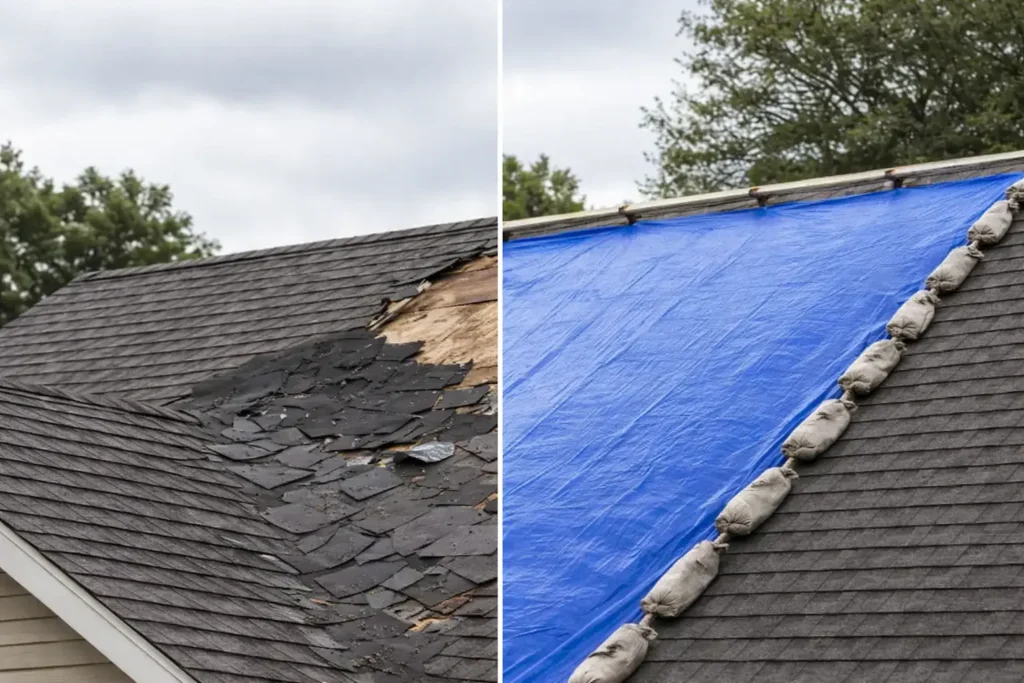
- Full Coverage: We tarp over broken decking, missing shingles, or partial collapse areas
Why Roseville Homeowners Trust Our Emergency Tarping Team
- 24/7 Rapid Dispatch – We’re on-site in under 2 hours for most Roseville addresses.
- 15+ Years of hands-on storm damage and active leak response experience in Roseville and nearby areas.
- Licensed & Insured – Certified professionals using OSHA-compliant safety protocols.
- Residential and commercial roof tarping capability, including steep-slope and flat roofing systems.
- Storm-Ready Equipment – Reinforced tarps and secure anchoring systems built for wind and rain.
- Insurance-Compatible Documentation – We provide full photo logs and claim-ready damage reports.
- No Upfront Payment Required – Work starts immediately, even while insurance is pending.
- Local Expertise – We understand Roseville’s microclimates and roof structures.
Our Roof Tarp Installation Services in Roseville, CA
At Gauntlet Roofing, we follow a clear emergency flow: we assess the damage, document the condition, install temporary roof protection, and then guide you into permanent repair.
Install Emergency Roof Tarps Roseville
At Gauntlet Roofing, our emergency roof tarping service follows a structured mitigation workflow designed for speed, safety, and property protection. We assess roof damage, identify active leak sources, document existing conditions, and install heavy-duty temporary roof protection to prevent further water intrusion.
- Rapid emergency dispatch and professional on-site roof assessment
- Detailed photo documentation, leak mapping, and damage measurements
- Heavy-duty waterproof tarp installation with wind-resistant fastening systems
- Ridge, edge, and penetration securing to reduce uplift and water migration
- Clear repair recommendations and next-step project planning
Waterproof Roof Tarping
Water intrusion can spread quickly through decking, insulation, and drywall. Gauntlet Roofing installs heavy-duty waterproof tarps to create temporary roof protection that blocks rain entry and reduces ongoing interior damage. We extend coverage beyond the visible opening so runoff and wind-driven rain are less likely to travel under exposed materials.
- Heavy-duty waterproof tarp coverage
- Water-intrusion reduction strategy (coverage overlap)
- Leak containment priority for active drip zones
Hurricane Damage Roof Tarp
When severe wind and driving rain create widespread exposure, emergency protection must be fast and methodical. Gauntlet Roofing provides hurricane damage roof tarping to reduce water intrusion and help stabilize the structure until permanent repairs can begin. Safety and secure fastening guide every step.
- Rapid stabilization for severe storm exposure
- Heavy-duty tarps with reinforced securing
- Documentation to support mitigation records
Commercial Roof Tarping
Commercial buildings often have large roof surfaces, multiple penetrations, and critical interior assets. Gauntlet Roofing provides emergency commercial roof tarping to protect inventory, offices, and equipment while reducing downtime. We focus on secure fastening, edge control, and coverage around common commercial leak points.
- Temporary protection for warehouses, retail, and offices
- Coverage around HVAC curbs and roof penetrations
- Clear repair path to restore watertight performance
Wind Damage Roof Tarps Install
Wind can lift edges, tear materials, and expose underlayment or decking. Gauntlet Roofing installs tarps with wind-resistant securing and reinforced edges to reduce uplift risk during follow-up storms. We prioritize ridge and perimeter control where wind pressure is highest.
- Wind-uplift reduction at edges and ridges
- Secure attachment point selection for stability
- Immediate coverage for lifted or missing sections
Flat Roof Tarps Installation
Flat and low-slope roofs often leak at penetrations, transitions, drains, and seams. Gauntlet Roofing provides flat roof tarping that focuses on secure attachment, edge control, and protection around common leak points. This is especially important for commercial buildings where interior assets are at risk.
- Protection around drains, seams, and penetrations
- Stable fastening for low-slope conditions
- Clear scope notes for repair planning
Temporary Roof Tarping or Covering
Temporary roof tarping buys time, but it must be installed correctly to work. Gauntlet Roofing uses professional-grade tarps and secure fastening methods to protect your home or building until repairs are scheduled. We also explain next steps so you know what to do after the emergency is contained.
- Short-term protection designed to prevent further damage
- Re-secure guidance after additional weather events
- Transition plan to permanent roof repair
Apartment Complex Roof Tarp
Multi-unit properties require fast protection to minimize tenant disruption and interior damage across multiple units. Gauntlet Roofing provides apartment complex roof tarping with organized assessment, clear communication, and documentation for property management. We focus on coverage that reduces recurring leaks and stabilizes exposed areas.
- Mitigation focused on multi-unit leak spread
- Documentation suitable for management records
- Efficient scheduling to reduce disruption
Metal Roof Tarping
Metal roofs can leak at seams, fasteners, and penetrations after impact or wind stress. Gauntlet Roofing installs tarps that protect affected areas while avoiding unnecessary damage to panels. We focus on stable coverage and controlled water shedding until permanent metal roof repair is completed.
- Temporary coverage for seam and penetration leak zones
- Controlled runoff direction to reduce re-entry
- Repair recommendations tailored to metal systems
Shingle Roof Tarps or Covers
Missing shingles and underlayment exposure can lead to rapid leaks during the next rain. Gauntlet Roofing provides shingle roof tarping that covers the affected field area and overlaps beyond the damage to reduce water migration. This helps protect decking and interior finishes while repairs are planned.
- Covers missing shingle areas and exposed underlayment
- Overlap strategy to reduce water travel
- Repair pathway for replacement shingles and flashing
Tile Roof Tarps
Tile roofs can crack, shift, or break during storms and impact events. Gauntlet Roofing provides tile roof tarping to cover exposed areas and reduce interior water intrusion while preserving a path to proper tile repair. We focus on safe access and stable coverage until restoration work begins.
- Temporary protection for broken or missing tiles
- Coverage designed to reduce water entry beneath tile fields
- Repair guidance for underlayment and tile replacement
Our 4-Step Emergency Roof Tarping Process
When Is Emergency Roof Tarping Needed in Roseville?
- Monsoon Storms & High Winds – Strong wind gusts can lift shingles, break tiles, or tear membrane roofing, exposing your home to sudden leaks.
- Heavy Rain & Flash Flooding – Even minor roof gaps can lead to water intrusion during intense downpours common in atmospheric river events.
- Hailstorms & Flying Debris – Hail or falling branches during storms can puncture roof surfaces, making tarping necessary to prevent interior damage.
- Fire or Heat Compromise – Roseville's hot summers and wildfires can cause structural warping or roof burnout, leaving areas exposed.
When disaster strikes your roof whether from storms, fire, or falling debris acting fast is critical to protect your home from further damage. That’s where a trusted emergency roof tarping company comes in. Emergency roof tarping offers critical short-term protection, especially when insurance claims or contractor scheduling delays your ability to start permanent repairs. At Gauntlet Roofing, we specialize in rapid-response tarping solutions tailored to Roseville’s unique weather patterns, ensuring your property stays safe while permanent repairs are arranged.
Insurance Claim Support for Roof Damage & Tarping
- Monsoon Storms & High Winds – Strong wind gusts can lift shingles, break tiles, or tear membrane roofing, exposing your home to sudden leaks.
- Heavy Rain & Flash Flooding – Even minor roof gaps can lead to water intrusion during intense downpours common in atmospheric river events.
- Hailstorms & Flying Debris – Hail or falling branches during storms can puncture roof surfaces, making tarping necessary to prevent interior damage.
- Fire or Heat Compromise – Roseville's hot summers and wildfires can cause structural warping or roof burnout, leaving areas exposed.
Emergency mitigation is typically covered under homeowners insurance—our team ensures you stay compliant while getting protected fast.
Book Your Free Roof Tarp Inspection
Frequently Asked Questions
How soon after a Roseville storm should I tarp my roof?
Immediately. In Roseville’s seasonal storms—especially during atmospheric river events or high-wind advisories—roof damage can escalate quickly. A tarp should be installed within hours to prevent water intrusion, mold, or structural weakening.
Does insurance require professional tarping evidence for claims?
Yes. Most homeowners’ insurance policies require proof of “reasonable mitigation,” which includes professionally installed tarps. Photos, installation notes, and invoices help demonstrate that damage was controlled to avoid further loss.
Can roof tarping protect against long-term interior damage?
Absolutely. Emergency tarping prevents ongoing water penetration that can damage drywall, insulation, and electrical systems. Even a temporary cover can protect your attic and ceilings while you wait for full repair or claims processing.
Is emergency tarping needed if the roof only has minor leaks?
Yes. Small leaks often indicate underlying structural or flashing damage. Without protection, even minor entry points can lead to hidden mold growth or insulation collapse during heavy rain.
What should I do while waiting for the tarp installation team?
If safe, place buckets or plastic sheeting under leaks. Avoid walking on the roof. Document visible damage with photos. Then, call a certified emergency tarping team immediately to prevent further deterioration.